
Giving her back to the Land
Journeys with a Corn Goddess

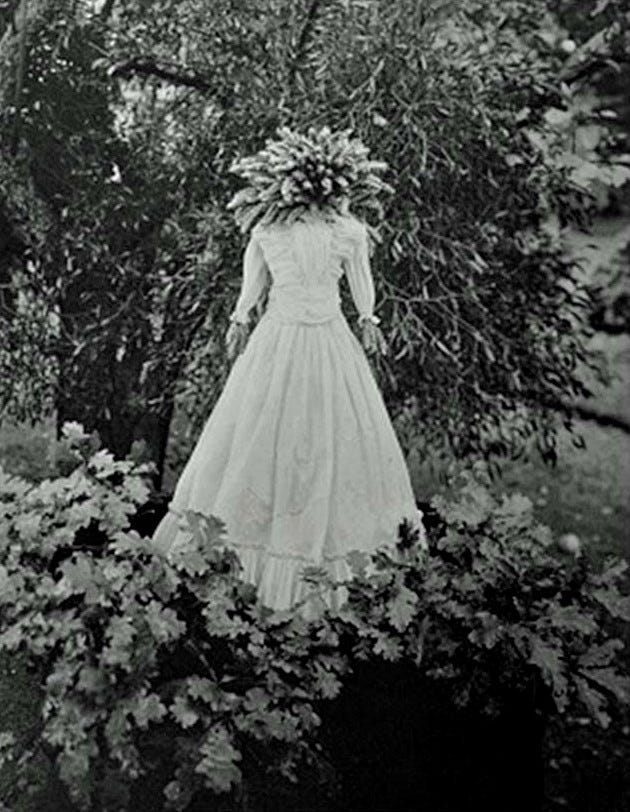
“We are showered every day with gifts, but they are not meant for us to keep. Their life is in their movement, the inhale and the exhale of our shared breath. Our work and our joy is to pass along the gift and to trust that what we put out…. will always come back.”
‘Braiding Sweetgrass’,
Robin Wall Kimmerer
This piece recounts a recent assignment to help build an 8ft ‘corn dolly’ for the opening ceremony of Medicine Festival, which took place the weekend before last on Wasing Estate, near Reading, in the UK. It proved to be a rich lesson in reciprocity - in holding on and letting go - taught to me by a giant woman woven out of wheat. And her lessons will be informing a very special arts intensive that I am co-facilitating on Ibiza in October, the details of which you will find at the end of this post.
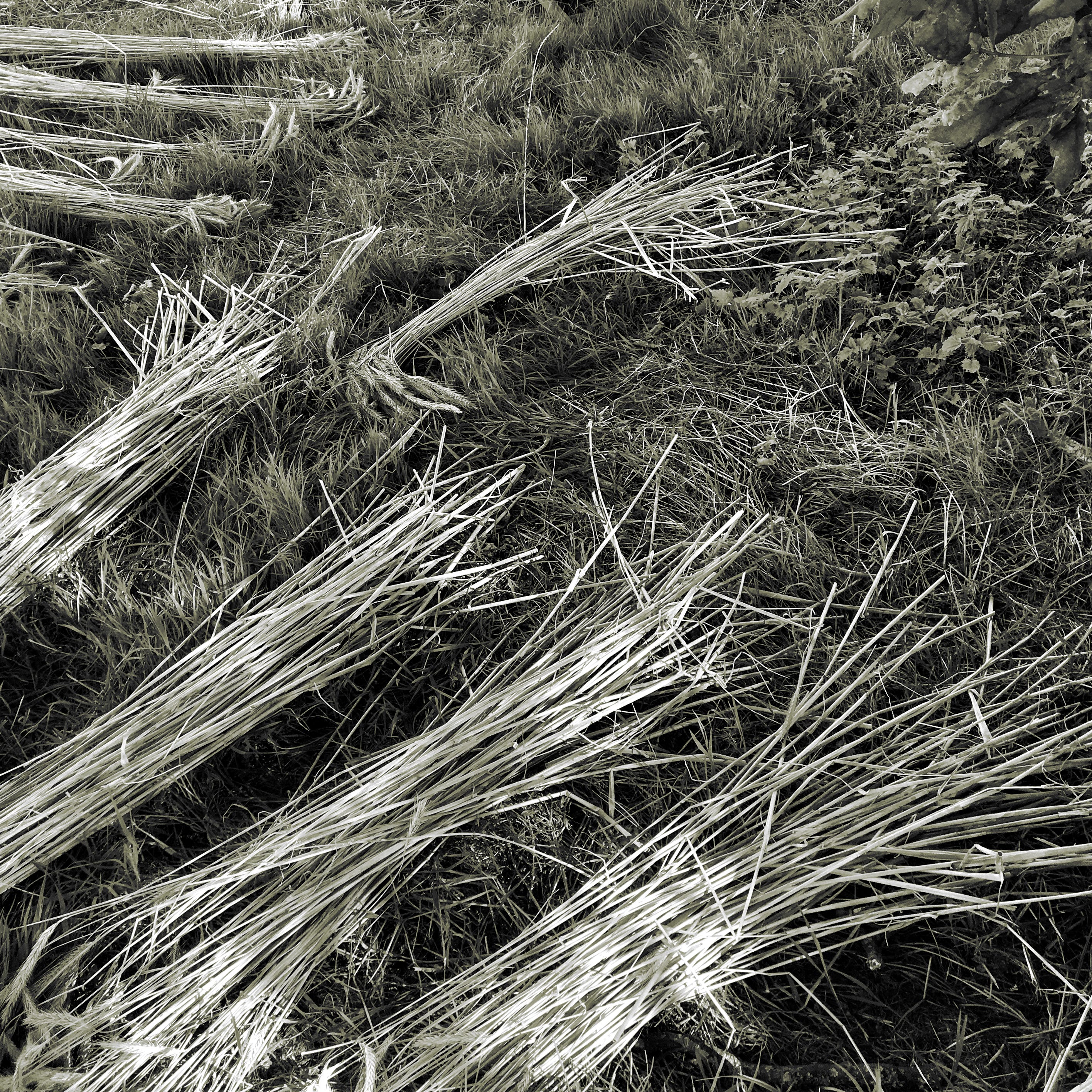
As we stand there, in the shade of an enormous old tree, a car pulls in with a trailer behind it. Inside is a huge heap of harvested rye, and two young boys with their spindly legs dangling over the end. As the farmer’s sons help to heave armfuls of the freshly-scythed wheat into a pile on the grass, they are excited and curious about the project that their father’s crop is going to be used for.
Then they leave, and we are left alone with this mound of tangled, blonde stalks - three women and I; we have only just met. Some have travelled far to get here, and are sleep deprived. There is a mission to go looking for some tea. We are gently navigating our way into this new collaboration, in which the leadership roles are completely undefined. One woman has gone to lie down for a nap in the long grass. I could verbalise my plan of action, but instead decide to quietly execute it, as I approach the rye pile and start pulling out individual, long stalks, slowly organising them into bunches of golden ears.
This collaboration that I have found myself in just before the start of Medicine Festival is a very interesting one. The woman who sought my participation is Annie Spencer, a ceremonialist, British elder, shamanic practitioner and nothing less than a witch, in the best possible sense. Her hair is long and snow white, her skin is paper-delicate and creased, as though bearing the story of a hundred buffeting mountain winds, morning frosts, scorching harvests and mid-winter gales. Annie doesn’t care for publicity, renown or social media - yet an inquisitive Google search reveals that there are viral interviews with her circulating on Instagram and TikTok. She has conceived, and will execute the ceremonial journey of this corn goddess - but it looks like I am the only one in the group with a clear sense of how we can actually make her. Here I am, all keen and friendly with my tote bag containing a small coil of wire, some strong scissors, a ball of twine and some emergency cable ties.
Sorting the rye pile into bunches of ears is a blissfully calming activity. A million racing thoughts which travelled with my tired, frazzled brain and loaded car to the festival site, earlier that day, finally slow down - and I’m there beneath the lush leafy boughs, letting my hands take charge to organise wispy lengths of wheat. Soon, the other women gather around the pile and we are all doing this together. I try to ask Annie some intelligent questions about what she does: she looks up and smiles at me with her creased eyes, and says slowly ‘listen... I’m happy to talk about these things later, but for now I don’t think we should talk. We are calling her in.’ In all honesty, I’m relieved.
We have about 24 hours to create the corn dolly in time for the opening ceremony of the festival. Later that afternoon, I suggest that we start tying the bundles of wheat with twine, to create solid shapes which we can use to start laying over her willow torso, like roof tiles. ‘It’s too soon’, says Annie, her brow furrowed. ‘She needs to arrive first.’
*** *** ***
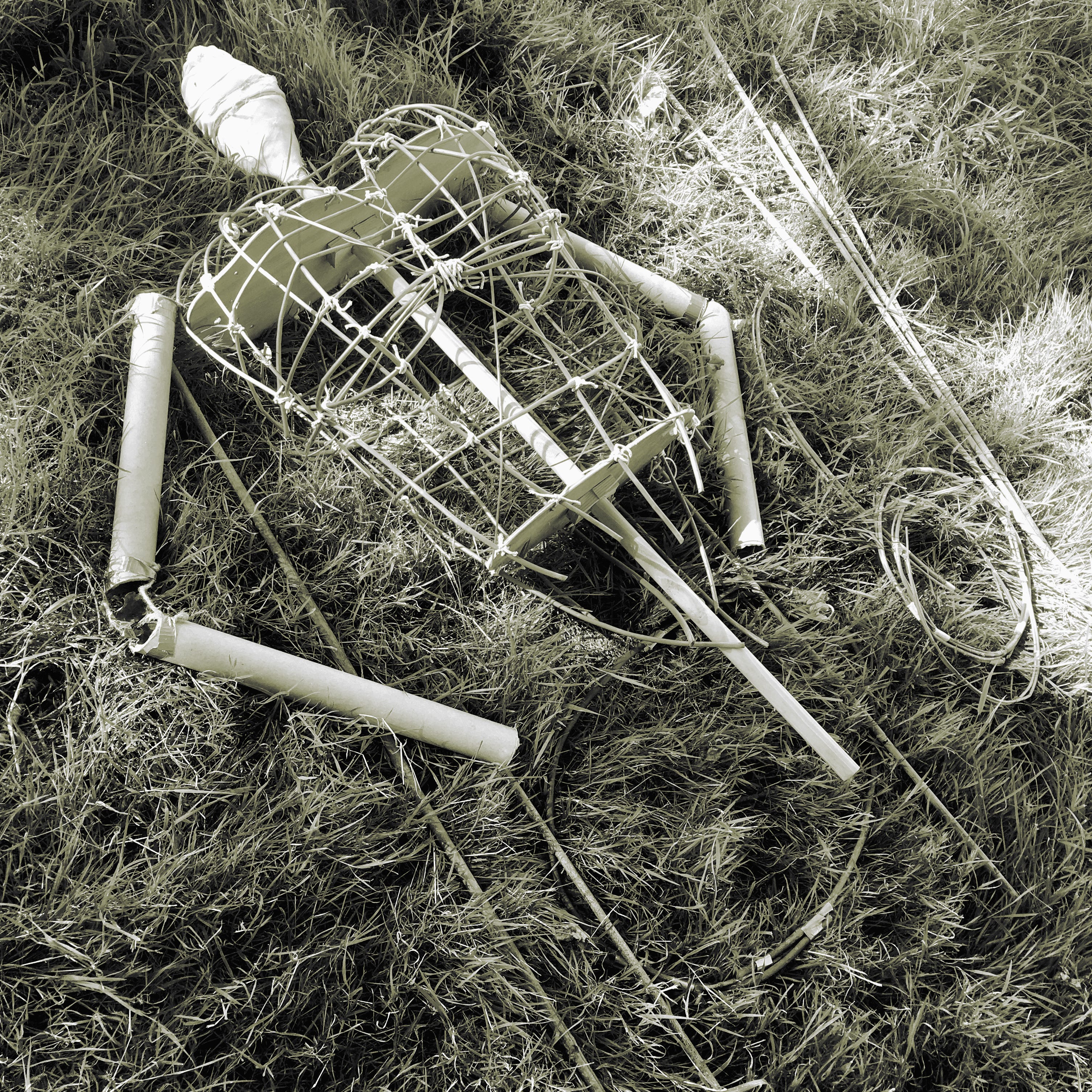
The next morning, Annie has disappeared to lead a fire-lighting ceremony somewhere else on-site. We have about six hours left, each of us juggling this wheat mission with various other commitments. Alone under the tree, my hands find themselves tying our painstakingly-gathered bunches of wheat, and beginning to attach them to the hollow structure. It’s a satisfying and magical process. She is arriving. In that moment I realise that these spirits - of corn, of wheat, of whatever else - don’t exist independently of us, like holier than thou forces. They come through us, and they are us. This corn dolly is arriving, and it just happened through the act of being here, letting my hands move, and my mind wander.
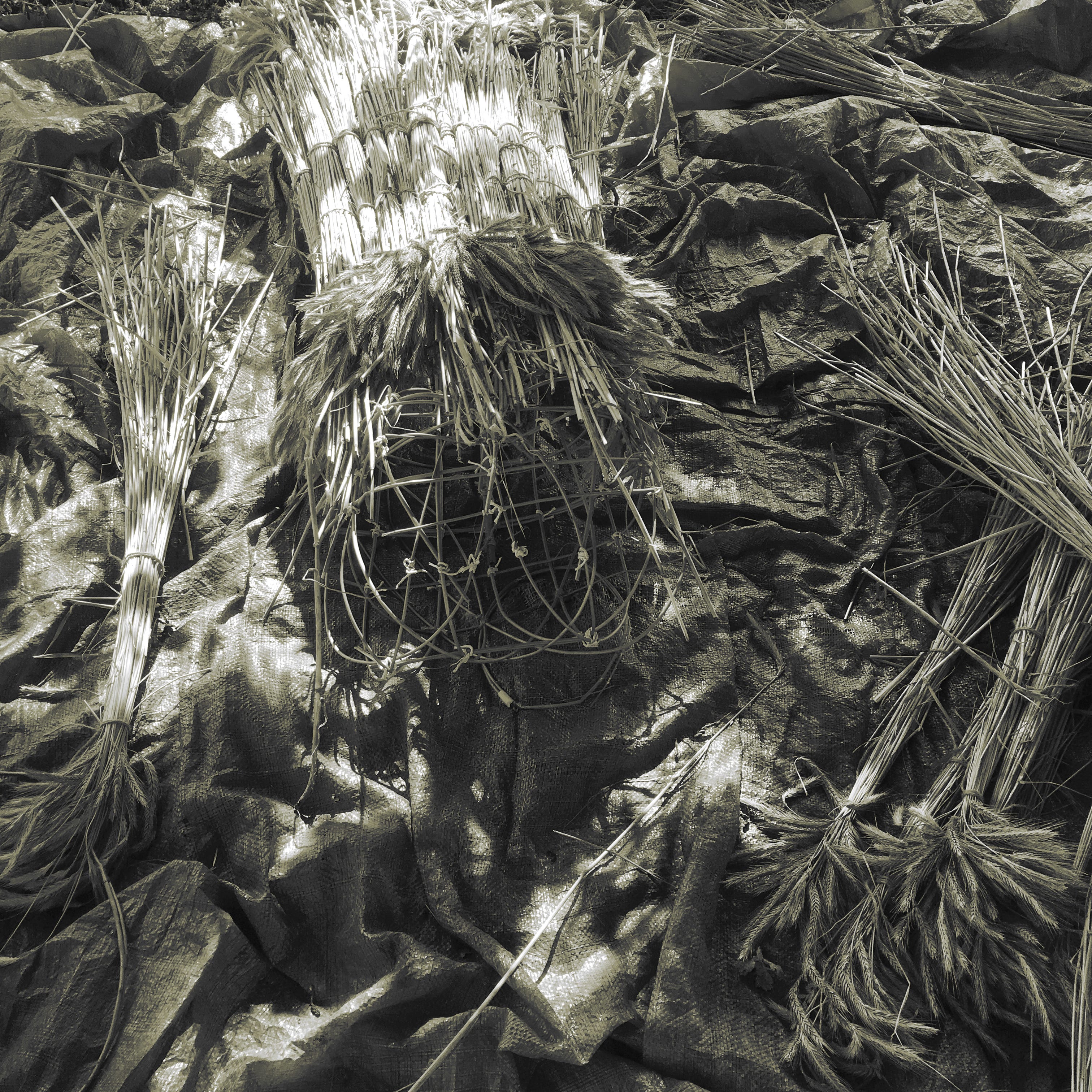
Scores of people are beginning to arrive to the festival now, a couple of hours before it officially begins. As I tie, tighten and adjust wheat bundles around the corn goddess’s torso, I see the streams of newcomers pass along the nearby track, weighed down by tents and sleeping bags. It would be easy to have a quiet little panic now. I am alone with a half-made sculpture which, in about four hours, will provide the centrepiece to a ceremony witnessed by around 4000 people, they tell me. And in twenty minutes I have to leave to perform on the other side of the festival site. I keep tying the bundles. It’s quiet miraculous, how she is forming in the long grass beneath me.
Andrea appears - as ever, a calm, measured, humble and friendly presence. I explain that I need to go soon, and suggest that it will be easy to show her what I am doing, and for her to take over from me. She agrees politely, and actually I have the feeling that she is masking her absolute joy to be able to take full responsibility for the corn dolly and to be left to craft her, alone, under the tree. Perfect for both of us.
I put down the twine, the scissors and the wheat, stand up, collect my rucksack and pull myself away. In my memory I walk backwards, unable to take my eyes off her. It is agonising to do this. I, just like Andrea, could not be happier than when I am there, under the tree, organising bunches of rye with my fingers and moulding them around a willow frame, tying bundle against willow stem, coaxing out springy ears of wheat so that they arrange themselves in a golden shower around the corn dolly’s waist. It’s horrible to walk away from this birthing process, and feels like an abandonment. But it turns out to be a crucial one.
Over two hours later I dash quickly and sweatily across the fields, my performance finished, to get back to the corn dolly. The opening ceremony is going to begin in an hour and a half. I imagine the corn goddess lying there in the long grass - overlooked, forgotten and unfinished, surrounded by loose wheat bundles. I must get back to her as soon as possible. She needs me.
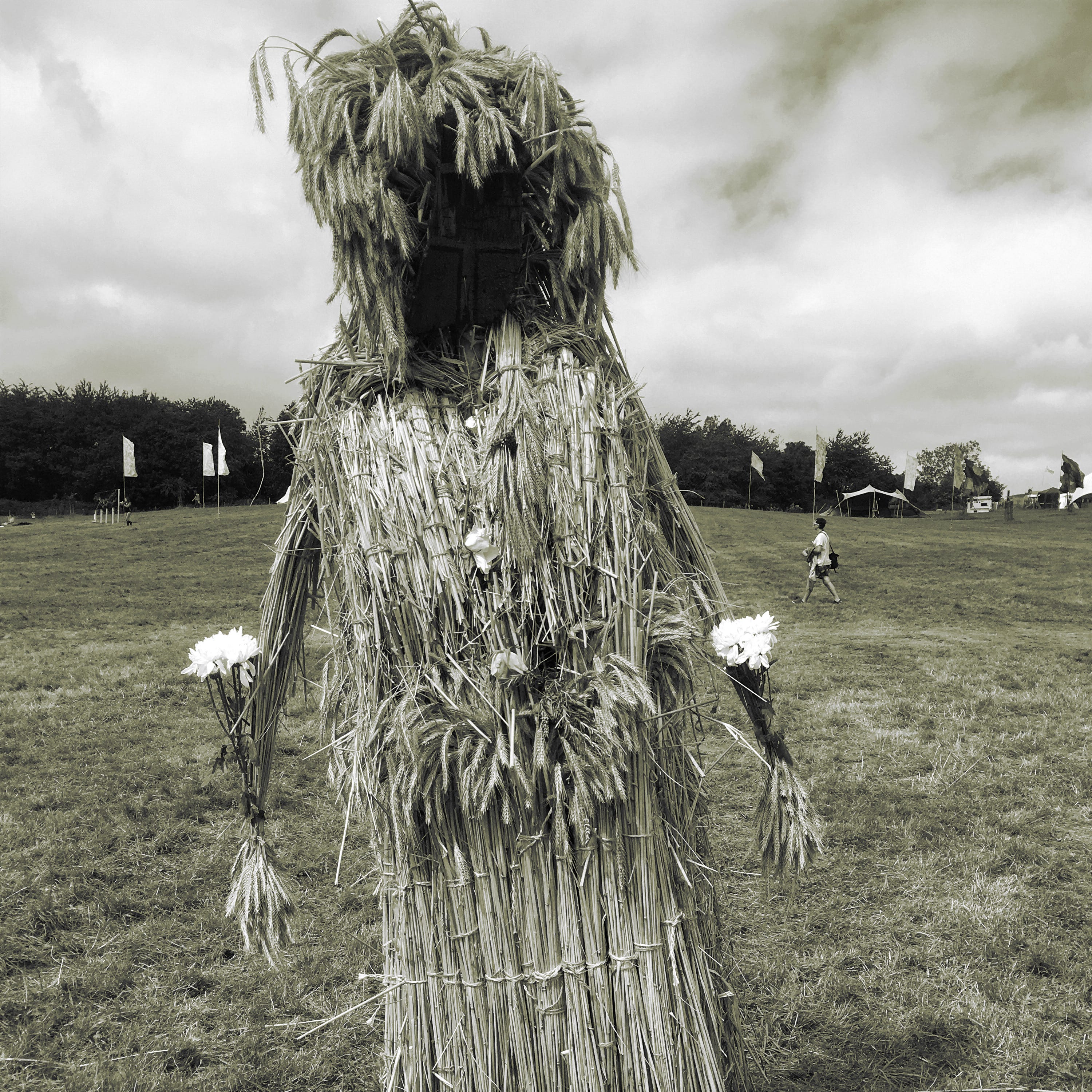
As I approach the tree, I can see that there are many new, unfamiliar faces there, beneath it. There is a flurry of life and activity. A handful of people are surrounding the woman made of rye, working on different areas of her body. The torso and skirt that I had begun that morning are full and complete. Now she has smooth, rounded shoulders. Delicate arms on either side, ending in hands made of dozens of fat ears of wheat, tied with string around the wrists. Those who are not working on the corn dolly are sat nearby, attentive and content: corn dolly midwives. Songs are being sung.
I stoop over the magnificent lady of the corn, smiling, and ask Andrea how her morning has been, although her eyes already tell me the answer: it’s been marvellous.
And from that moment on, a project which had began with tying, fixing and securing wheat into place became one about letting wheat go. For a fleeting little moment, I had had the feeling that the corn goddess arrived - in part, at least - through the movements of my own hands. But she was never mine to keep.
*** *** ***
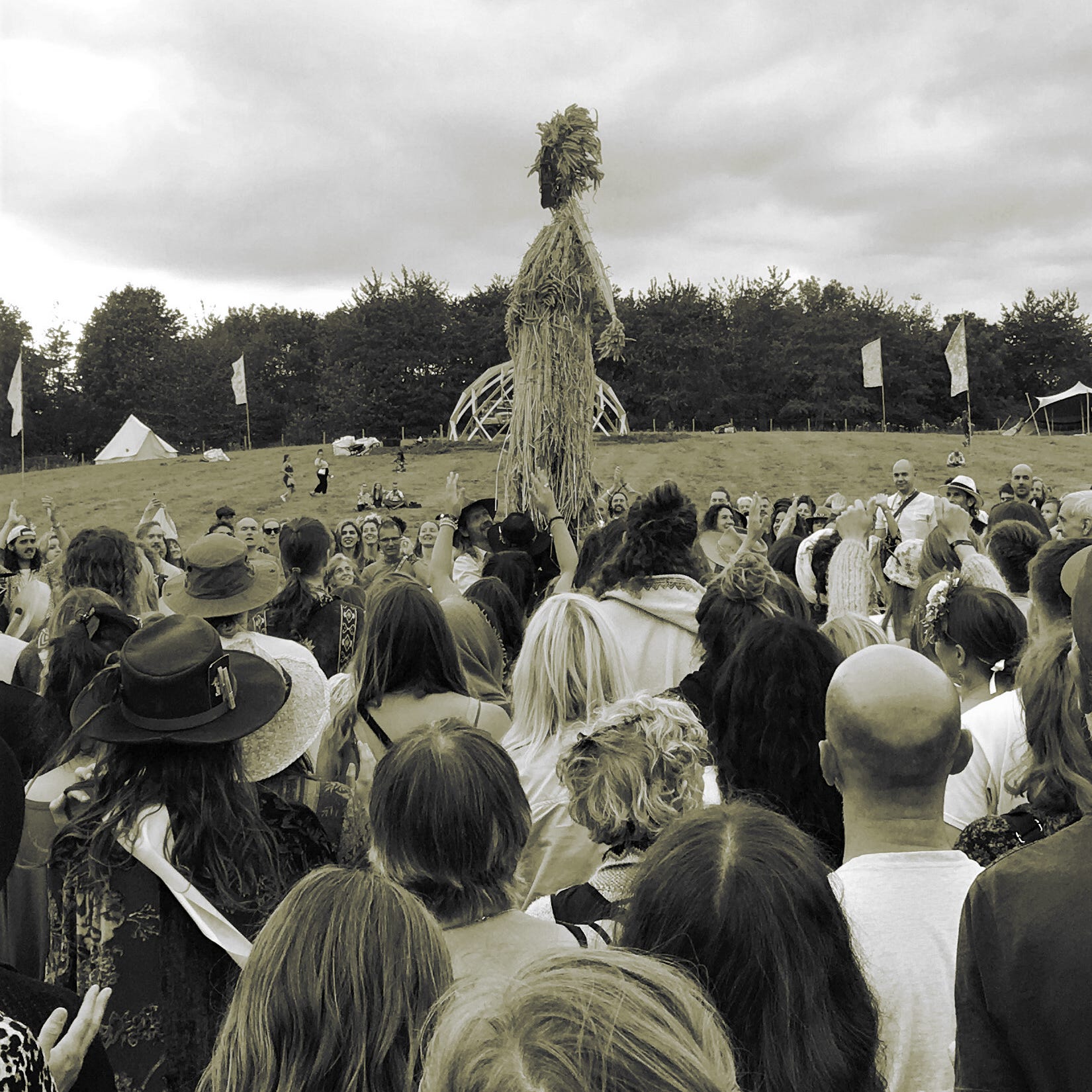
Later that afternoon, several thousand festival goers did, indeed, witness the corn goddess being processed into the middle of a circular space, and animated to life in the hands of Josh, the landowner, and George, one of the festival co-founders. She stood in that same spot for the duration of the festival, until the morning that it ended, when a small group carried her into the nearby woods to lay her down, once more, on the earth.
If you are interested in exploring these themes around reciprocity, ritual, craft and ecology in the pine-forested, red-earth terrain of Ibiza, then I invite you to my first ever five-day arts intensive, happening from 16th - 20th October, 2023. Exploring Memories of Landscapes Forgotten is a collaboration with Gemma Mallol, a Butoh dancer and somatic movement practitioner based in my native landscapes of South West England, but with Ibizan ancestry. For five days, we will combine Gemma’s site-specific movement practice in wild, outdoor locations of the island with a puppet-making process facilitated by me. It will be a multi-disciplinary voyage into Ibiza’s landscapes, and the myths and stories contained within them…. and we are really excited to dive in. Full details are here, and places are filling so we highly recommend booking soon. Via the same link you will also find details of the five-day intensive led by Gemma and the wonderful surrealist artist Romanie Sanchez, which will take place the week before mine, exploring similar threads and passions - sign up for both if you feel like a deep immersion into Ibiza’s landscapes through arts, culture and movement practice.
Email me with any questions, or to book your place: hrubyjoanna@gmail.com
< < First image (above): Kern Baby, 1902, Benjamin Stone, from the Benjamin Stone Archive.
So glad I’ve found your writing! What an insight into the process of creating & letting go. Wow!